What's Actually In Your Skincare? A Clean Beauty Ingredient Guide
What's Actually In Your Skincare? A Clean Beauty Ingredient Guide
I used to think I was a pretty informed shopper. I read labels. I avoided a few well-known bad guys. I gravitated toward things that said "natural" or "gentle" on the front.
And then I actually started paying attention to the ingredient lists, not just skimming them, and wow. I had a moment. A real one.
The stuff I thought was taking care of my skin was mostly just water. Fancy water with a few actives thrown in and a whole cocktail of preservatives to keep it all from going bad. That's not a skincare routine. That's a science project I was paying too much for.
If you've ever stood in the skincare aisle and felt genuinely overwhelmed by ingredient lists you can't pronounce, this one's for you. Let's make it simple.
The First Ingredient Is the Loudest One
Ingredients are listed in order of concentration, from highest to lowest. So whatever's listed first is what makes up the bulk of the product.
For the majority of conventional skincare products, even the expensive ones, the first ingredient is "aqua." Water. Up to 60–80% of the formula is just water.
That's not automatically a problem. But water is a filler. It adds volume and a nice texture, but it doesn't do anything for your skin on its own. And once you introduce water into a formula, you create a breeding ground for bacteria and mold. This means you need preservatives to stabilize it.
Some preservatives are fine. Others you'd rather not put on your face daily for years. And the more water in the formula, the more preservatives you need.
The Ingredients Worth Knowing
You don't need a chemistry degree to make better choices. Here are the ones that actually matter:
Hydroxytyrosol — This is the one I look for first now. It's a powerful antioxidant found in olive leaf extract, and it's three times more potent than Vitamin C for neutralizing free radicals that contribute to visible aging. When you see it near the top of an ingredient list, it means it's actually present in meaningful amounts.
Synthetic fragrance — Listed as "parfum" or "fragrance," this is a catch-all term that can contain dozens of unlisted chemicals. It's one of the most common skin irritants. If you have sensitive skin, this is often the culprit.
Parabens — Used as preservatives. Look for methylparaben, propylparaben, or butylparaben. Many brands have moved away from these in favor of gentler options, but they still show up in a lot of products.
PEGs (polyethylene glycols) — Synthetic compounds used to thicken and soften formulas. Not inherently dangerous, but they're petrochemical derivatives that you may want to opt out of where possible.
The goal isn't perfection. It's awareness.
What Waterless Skincare Actually Changes
When a brand removes water from their formulas, a few things shift immediately.
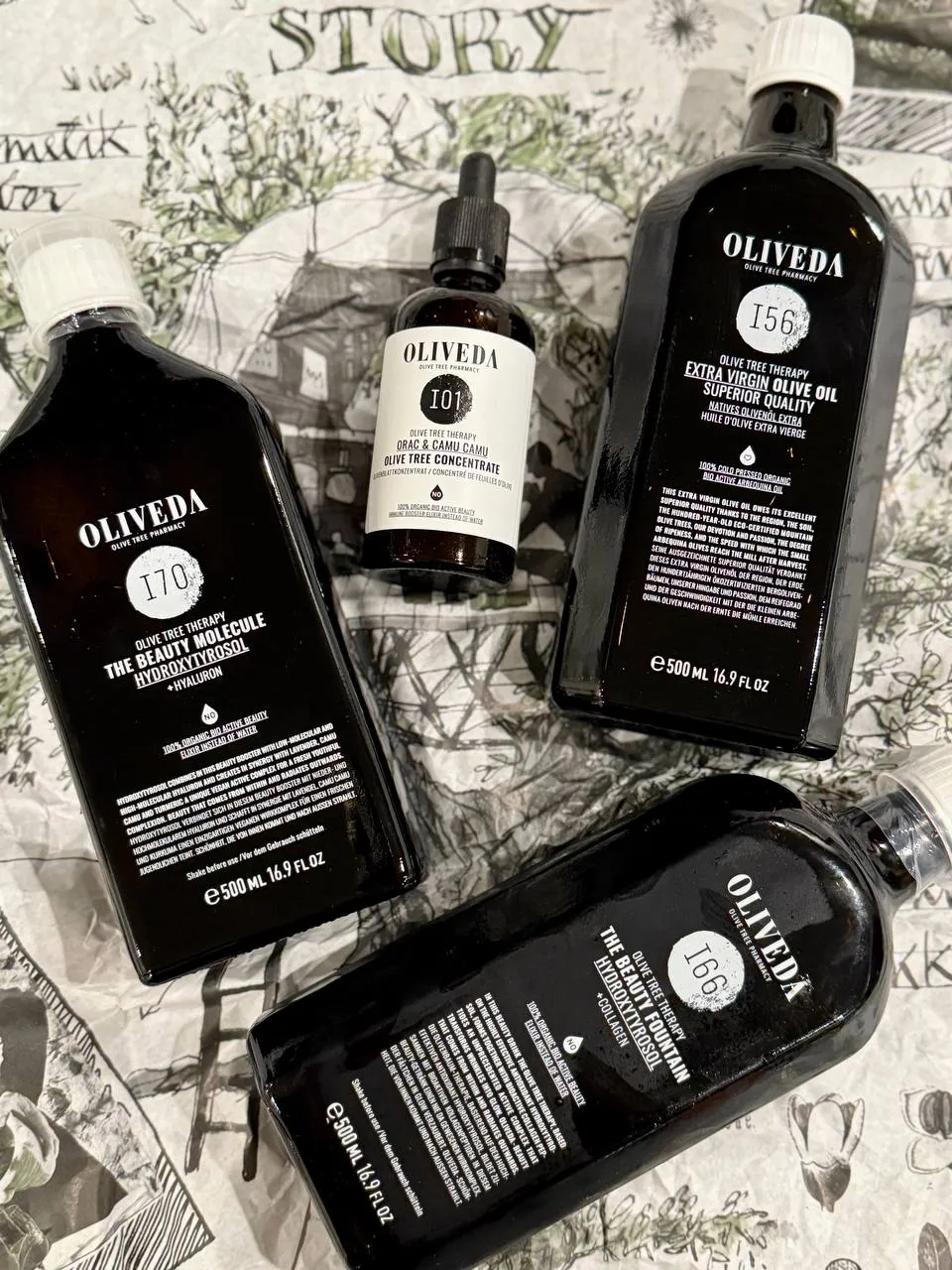
The first ingredient becomes something that actually works. In Olive Tree People's lineup, water is replaced by olive leaf cell elixir. That is a concentrated bioactive liquid extracted from over 30,000 organic mountain olive trees in Spain. That elixir is loaded with hydroxytyrosol, polyphenols, and natural hydrators. It's not a filler. It's the whole point.
And because there's no water, the need for heavy preservative systems drops significantly. The formulas stay cleaner, more concentrated, and frankly more effective.
A Hero Product Worth Highlighting
The F38 Purifying Cleansing Gel is a perfect example of what waterless can look like in practice. It's a concentrated gel cleanser from the OLIVEDA clinical line that removes what needs to go without stripping your skin of what it needs to keep. No harsh foaming agents. No synthetic fragrance. Just a clean, purposeful formula with olive leaf elixir as the base.
I use it most mornings. It takes thirty seconds, rinses clean, and my skin doesn't feel tight or irritated after. That's what a good cleanser is supposed to do.
Reading Labels Is a Skill — Start Small
You don't need to memorize every ingredient. Start with one rule: look at what's listed first and second. If it's water followed by a short list of actives, you know what most of that bottle is.
Then ask: what's replacing the water? Is there anything on that list that's doing real work for your skin?
Browse the full Olive Tree People collection here and see what a label looks like when the first ingredient is actually doing something. And if you want a personalized recommendation based on your skin type and concerns, reach out. I love this stuff and I'm happy to help. 💚